
You're replacing the furnace and AC with a heat pump, or swapping the old gas water heater for a heat pump water heater. Good move. Here's the question that almost never comes up in that conversation: should you add a battery while the electrician is already standing at your panel?
For a lot of homes, the answer is yes. Two reasons.
Reason 1: A battery deepens your control over your own energy
Every electrification upgrade moves more of your home onto electricity. Heating, cooling, hot water. That's the point. But it also means more of your comfort now depends on how and when you buy power.
This is where California's rules matter. Under the Net Billing Tariff, better known as NEM 3.0 and in effect since April 2023, the power you export to the grid is credited at the utility's avoided cost rather than the retail rate. When it took effect, the average export credit fell by roughly 75%. The takeaway is simple: sending your power to the grid is no longer where the value is. Using your own power is.
A battery is what turns that from a nice idea into something you actually do. It stores power when it's cheap or when your panels are producing, then runs your home on it during the expensive evening hours instead of buying at peak rates.
Pair that with the equipment you're already installing and it gets better. Heat pumps and heat pump water heaters are flexible loads. You can pre-cool the house or heat a tank of water in the middle of the day and coast through the costly part of the evening. On its own, that's useful. With a battery behind it, you stop being a passive ratepayer and start actively managing your home's energy.
There's a resilience side too. Once your heat, your air conditioning, and your hot water all run on electricity, an outage lands differently than it used to. A battery keeps the systems you now depend on actually running.
Reason 2: You'll probably add one eventually, so do it on one ticket
Here's the practical argument, and honestly it's the one that saves the most money.
Electrification work touches your electrical system. A heat pump and a heat pump water heater mean load calculations, new circuits, and in plenty of older homes a panel or service upgrade. That's an electrician, a permit, and an inspection.
A battery needs much of the same list. Electrical design, panel work, a permit, an inspection.
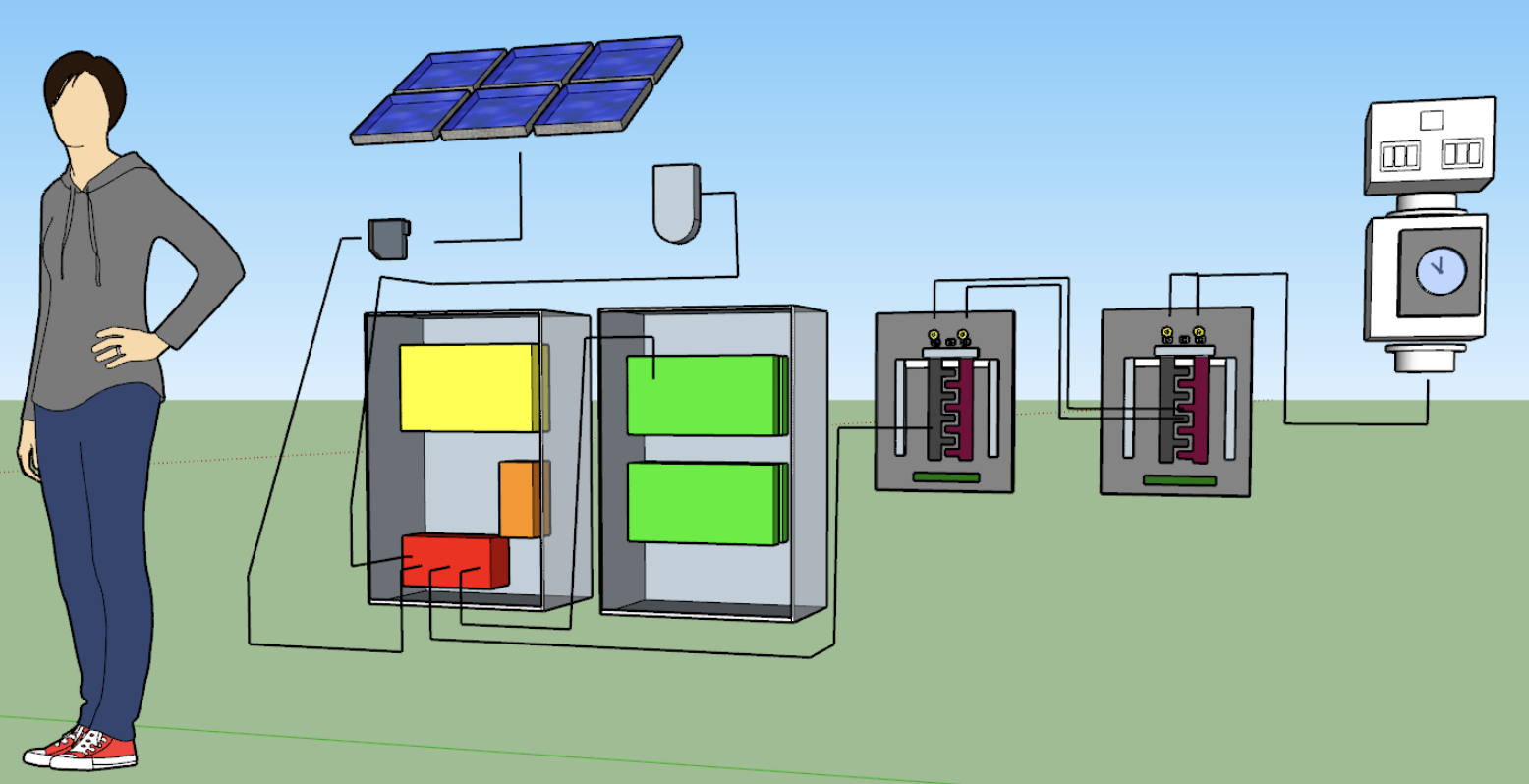
Do them together and you pay for that once. One design, one permit package, one crew mobilization, one inspection cycle, and a panel that gets opened a single time and sized correctly for where your home is heading.
Do them two years apart and you pay for the same groundwork twice. You re-permit, re-mobilize a crew, and reopen a panel that may have been sized for the smaller job. In the worst case you redo work you already paid for.
If that logic sounds familiar, it's the same reason we tell people not to put a 25 year solar array on a roof with five years left. Sequencing is where the savings hide. (See our piece on permitting and sequencing.)
Why this matters more in 2026 than it did last year
We'd rather be straight with you about incentives than oversell them.
The 30% federal residential credit, Section 25D, ended for systems placed in service after December 31, 2025. A battery bought with cash or a loan in 2026 does not get a federal tax credit. California's SGIP battery rebate has largely exhausted its general market budget, with the remaining funds aimed at income qualified and resiliency cases and waitlists in play.
So the case for a battery today doesn't rest on a subsidy. It rests on control, on resilience, and on not paying twice for the same electrical work. That last one is entirely in your hands, and it depends on timing.
Worth noting: the heat pump side of the project is a different story. Local programs like 3C-REN and 3CE still offer rebates on heat pump HVAC and heat pump water heaters, which is one more reason the upgrade itself pencils out. (More on stacking local rebates.)
Size it on your actual usage, not a guess
A battery sized on a rule of thumb is an expensive mistake in both directions. Too small and it doesn't carry you through the evening. Too big and you paid for capacity you never touch.
We start with your real usage data and model what changes once the heat pump and water heater are running. That tells us what your evenings actually look like, and what size battery earns its keep. (Start with your data.)
Questions worth asking before you sign
- Will this upgrade require panel or service work? If so, what does adding a battery on top cost right now versus later?
- What will my evening usage look like once heating, cooling, and hot water are electric?
- Which loads do I actually want backed up in an outage?
- Are we pulling one permit or two?
You don't have to add a battery. Plenty of homes shouldn't yet. But if you're already opening the panel, that's the cheapest moment you'll ever have to make the call, and it's worth making it on purpose instead of by default.
If you want to see what the numbers say for your home, start with your data and we'll model it together.